










Conversion
What is a KPI? The meaning and the most important KPIs for your online marketing

What is a KPI? It is a number that shows whether something important to your business is going well. KPI stands for key performance indicator. You pick a few, look at them every month, and change something when one moves the wrong way. For a plumber that might be enquiries per month. For a webshop it might be orders per 100 visitors.
What does KPI stand for, and what is it for?
KPI stands for key performance indicator. Take the words one by one. Key means it matters to your business. Performance means how well something is doing. Indicator means a number that points at it. Put together, a KPI is a number that tells you how something important is doing.
The purpose is simple: it stops you steering by feeling. Without a number, a quiet month feels like a disaster and a busy week feels like a trend. With a number, you see what is really happening and what to change.
The term is used well outside marketing. In a hospital, a KPI might be how long patients wait for an appointment. In a shop, it might be the average value of one basket or the sales per square metre. The abbreviation and the idea stay the same. Only the thing you measure changes.
Think of the dashboard in your car. You do not need forty dials. You need speed and fuel. Your KPIs are the two or three dials you really need.
What is the difference between a KPI and a goal?
A goal is where you want to end up. A KPI is the number that tells you how you are doing on the way there.
Say a physiotherapy clinic wants to fill its diary for the quiet winter months. That is the goal. The KPIs could be the number of booking enquiries per month and the share of enquiries that turn into a first appointment. If the first number is fine but the second is low, you know the problem is not traffic. It is what happens after someone gets in touch.
A goal usually has an end date. A KPI keeps being measured, month after month, so you can see whether you are still on track.
How do you write a good KPI?
A good KPI is specific enough that two people would measure it in the same way. 'More website success' is not a KPI. 'Enquiries from the contact form and the call button, per month' is. Check these points before you commit to one:
- What exactly are you counting? An enquiry, an order, a booked table, a phone call.
- Where does the number come from? A tool you can open yourself, not a guess.
- What do you compare it with? Last month, or the same month last year if your business is seasonal.
- What is the starting point? Write down today's number first. A target means little without it.
- What would you do if it dropped? If the answer is 'nothing', it is not a KPI.
Which KPIs should you track for SEO, Google Ads and your website?
Keep it to a handful per channel. Here are the ones that tell a small business owner something useful. A conversion is when a visitor does what you want: sends an enquiry, calls, books or buys.
For SEO, which means getting found in Google's normal results without paying per click:
- Organic clicks: how often people click through to your site from Google. The free Google Search Console shows this.
- Enquiries or orders that start from organic visitors.
- Clicks on the pages that earn you money, such as your main service pages, not just the blog.
Which KPIs matter for Google Ads and your website?
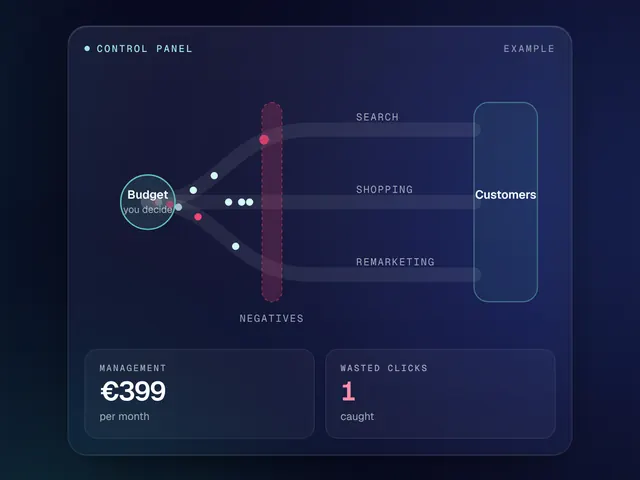
For Google Ads, the paid adverts above the normal results, the numbers that matter are these:
- Cost per enquiry: what you pay in ad spend for each lead.
- Return on ad spend: how much revenue comes back for every euro you spend.
- Conversion rate of the ad clicks: the share of people who click and then actually get in touch.
What should you measure on the website itself?
On your website, look at the conversion rate: the share of visitors who enquire or buy. A webshop should also watch average order value. These numbers are the starting point for conversion rate optimisation, which means improving the site so more of the same visitors take action.
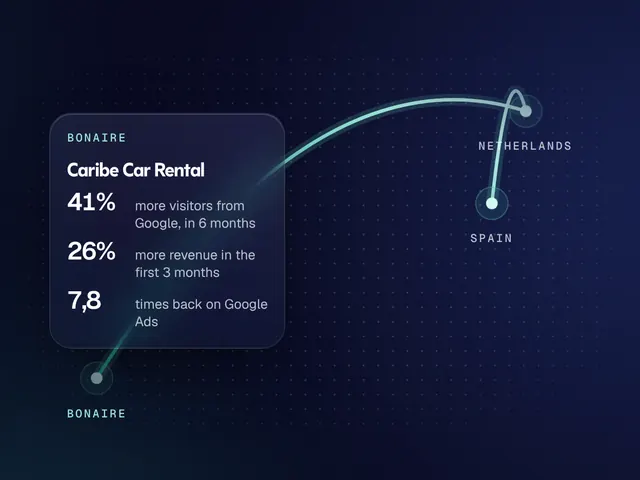
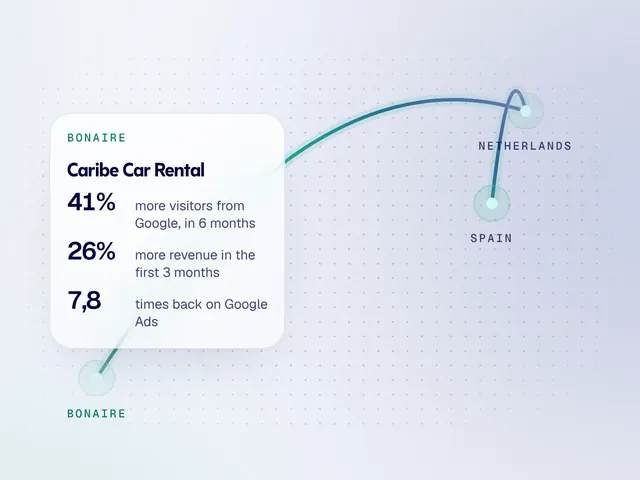
A real example: for Caribe Car Rental on Bonaire, every euro spent on Google Ads returned €7.80. That is return on ad spend, and it is a good KPI because it tells you straight away whether the budget is worth it. If that number drops, you look at the keywords, the adverts and the landing page. If you want help with that side, see Google Ads management. For the organic side, see SEO services.
A shop or café owner can use the same thinking. For a shop, track enquiries about opening hours and directions that start online, or webshop orders. For a café, track bookings made through the site.
What is a KPI report, and how often should you look at it?
A KPI report is one page with the same few numbers every month, each compared with the month before. Nothing more. If it takes you more than ten minutes to read, it has too much in it.
Monthly is right for most small businesses. SEO moves slowly, and a daily look at a number that wobbles will only make you nervous. If you run Google Ads with a larger budget, a quick weekly glance at cost per enquiry is sensible.
When you read the report, ask three questions. What went up or down? Why do we think that happened? What do we change next month? The third question is the one that makes the report worth having.
With Growetic, you talk to Dimitry, the founder, who does the work himself. The person explaining the numbers is the person who made the changes behind them.
Which numbers look like KPIs, but are not?
Some numbers feel important because they are easy to see. They are often called vanity metrics. Here are the usual suspects:
- Social media followers. Nice to have, but they do not pay your invoices.
- Total visitors on its own. A thousand visitors who never get in touch are worth less than fifty who do.
- Impressions. How often your advert or page was shown. It says nothing about whether anyone cared.
- Your position for one search term. It changes by person, place and day, and it says little about revenue.
- Time on site. Long can mean interested, or lost.
How do you choose your first KPIs?
Here is a quick test. If the number doubled and your revenue stayed the same, would you care? If not, leave it off the page. Start with the enquiries or orders you want, then one number for each channel that feeds them.
If you are not sure which numbers matter for your business, or where to find them, Request the free quickscan. It is free, even if you do not buy anything, and you get a clear view of what is worth measuring on your site.
Frequently asked questions
What does KPI stand for?
KPI stands for key performance indicator. It is a number that shows how well something important to your business is doing. The term is used in marketing, retail, healthcare and most other fields. Only the thing being measured changes, such as enquiries, waiting times or sales per square metre.
What is a good KPI example for a small business?
Enquiries per month from your website is a good one. It counts contact form messages and clicks on your phone number. It is easy to measure, easy to compare with last month, and it ties directly to work you can win. A webshop could use orders per 100 visitors instead.
What is the purpose of KPIs?
KPIs show you whether what you are doing works, so you can decide what to change. They replace gut feeling with a number you can compare month after month. A good KPI also makes it clear when something is going wrong early, before it costs you real money.
How many KPIs should a small business track?
Between three and six is enough for most small businesses. One or two for the result you want, such as enquiries or orders, and one or two for each channel, such as SEO or Google Ads. More than that and you stop looking at them. A short list gets read, and acted on.
Dimitry founder of Growetic. He does SEO, Google Ads and websites for businesses in the Netherlands, on Bonaire and in Spain.